
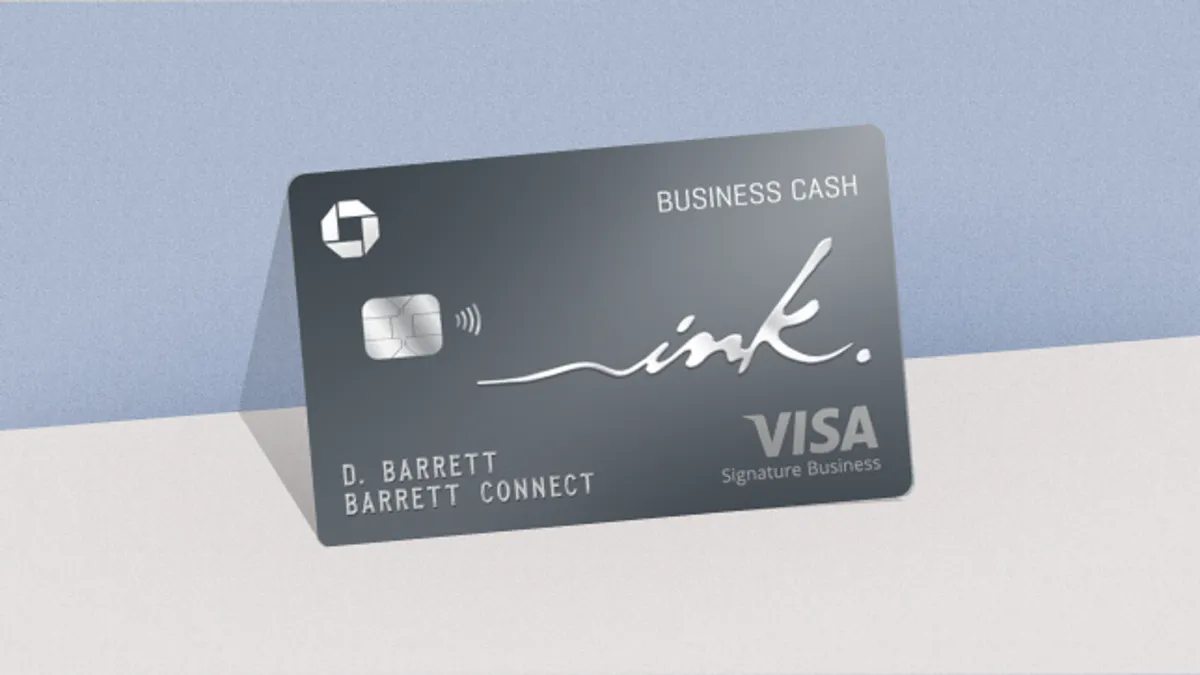
The Chase Ink family of business credit cards is the foundation of many serious points collectors’ strategies—and for good reason. These cards earn Ultimate Rewards points that can be transferred to airline and hotel partners, making them incredibly valuable for travel.
But with three core Ink cards to choose from (Preferred, Unlimited, and Cash), which one actually makes sense for your business? Let’s break down exactly what each card offers and when you should consider getting it.
Quick Comparison: All Three Chase Ink Cards
| Card | Annual Fee | Welcome Bonus | Best For |
|---|---|---|---|
| Ink Business Preferred | $95 | 100K points | Transferable points + travel purchases |
| Ink Business Unlimited | $0 | 90K points | Flat-rate earning on everything |
| Ink Business Cash | $0 | 90K points | Maximizing bonus categories (office, internet, phone) |
The tldr version: Get the Ink Preferred first (for transfer access), then add the Unlimited and/or Cash as your business spending cards.
Chase Ink Business Preferred: The Points Powerhouse
Annual Fee: $95
Welcome Bonus: 100,000 points after $8,000 spend in 3 months
Point Value: Worth up to $1,250 for travel (or $2,000+ transferred to partners)
Why the Ink Preferred Matters
The Ink Business Preferred is the only Ink card that lets you transfer Ultimate Rewards to airline and hotel partners at 1:1. That alone makes it essential for anyone serious about travel rewards.
Key Earning Rates:
- 3x points on the first $150,000 spent in combined purchases each account anniversary year:
- Travel
- Shipping purchases
- Internet, cable, and phone services
- Advertising on social media and search engines
- 1x point per dollar on everything else
The advertising category is huge for businesses running Meta, Google, or LinkedIn ads. At 3x on up to $150K, that’s potentially 450,000 bonus points per year from your marketing spend alone.
Transfer Partners Make It Special
With the Ink Preferred, your points can transfer to:
Airlines:
- United MileagePlus
- British Airways Avios (currently 20% bonus through March 31!)
- Air France/KLM Flying Blue
- Virgin Atlantic (fantastic for partner awards)
- Southwest Rapid Rewards
- Singapore Airlines KrisFlyer
- Air Canada Aeroplan (free stopovers!)
- And more…
Hotels:
- World of Hyatt (best value, typically 1.8-2.5 cents per point)
- Marriott Bonvoy
- IHG One Rewards
This transfer ability is why the Ink Preferred’s value ceiling is much higher than 1.25 cents per point. Transfer to Hyatt for a luxury stay and you might get 2+ cents per point. Book partner business class through Virgin Atlantic and you could get 3-4+ cents.
Who Should Get the Ink Preferred?
✅ Anyone who wants to transfer Chase points to partners
✅ Businesses spending heavily on advertising ($50K+/year)
✅ Anyone who hasn’t held the card before (for the bonus)
✅ People willing to pay $95/year for premium transfer access
❌ Skip it if you only want cash back (the Unlimited is better)
❌ Skip it if you already have a Sapphire Reserve or Preferred (you already have transfer access)
Chase Ink Business Unlimited: The Everyday Earner
Annual Fee: $0
Welcome Bonus: 90,000 points after $6,000 spend in 3 months
Point Value: Worth up to $1,125 for travel (more with transfer access from another card)
Simple and Effective
The Ink Business Unlimited is beautifully straightforward:
Earning Rate:
- 1.5x points on EVERYTHING — no categories to track
That’s it. No caps. No quarterly activation. No mental math about whether something codes as “office supplies.” Just 1.5 points per dollar on every single purchase.
For businesses with diverse spending that doesn’t fit neatly into bonus categories, this simplicity is powerful.
The Math on Flat-Rate Earning
On $50,000 in annual business spending:
- Ink Business Unlimited: 75,000 points
- A generic 1% cash back card: $500
Those 75,000 points? They’re worth at least $750 through Chase Travel, or potentially $1,200+ if transferred to Hyatt through an Ink Preferred or Sapphire card.
Who Should Get the Ink Business Unlimited?
✅ Any business owner who wants a no-fee, high-earning card
✅ Perfect complement to the Ink Preferred (for non-bonus spending)
✅ Anyone with variable spending that doesn’t fit traditional categories
✅ People who hate tracking bonus categories
❌ Skip it if your spending is concentrated in the Ink Cash bonus categories
❌ Not ideal as your only card (you’d miss out on transfer partners)
Chase Ink Business Cash: The Category King
Annual Fee: $0
Welcome Bonus: 90,000 points after $6,000 spend in 3 months
Point Value: Worth up to $1,125 for travel (more with transfer access)
Powerful Bonus Categories
The Ink Business Cash offers some of the highest category bonuses you’ll find:
Earning Rates:
- 5x points on the first $25,000 spent in combined purchases each account anniversary year:
- Office supply stores
- Internet, cable, and phone services
- 2x points on the first $25,000 spent at gas stations and restaurants each account anniversary year
- 1x point per dollar on everything else
Where This Card Shines
If your business spends heavily at Staples, Office Depot, or OfficeMax, the 5x bonus is incredibly valuable. These stores sell more than just paper—you can buy:
- Gift cards (some restrictions apply)
- Electronics
- Cleaning supplies
- Break room items
- Tech accessories
Similarly, the internet/cable/phone bonus at 5x is often better than the Ink Preferred’s 3x for these same categories—if you stay under $25K.
Ink Cash vs. Ink Preferred: Category Overlap
Both cards bonus internet, cable, and phone services, but:
- Ink Cash: 5x on first $25,000
- Ink Preferred: 3x on first $150,000
If your telecom spend is under $25K/year, the Ink Cash wins. Over $25K? The Ink Preferred’s higher cap matters more.
Who Should Get the Ink Business Cash?
✅ Businesses that buy from office supply stores regularly
✅ Anyone with moderate telecom bills ($500-2,000/month)
✅ People who want another welcome bonus (it’s a different product)
✅ Complement to the Ink Preferred for category optimization
❌ Skip it if you never shop at office supply stores
❌ Less valuable if your spending is spread evenly (Unlimited might be better)
The Ultimate Strategy: Stack Multiple Ink Cards
Here’s what the pros know: you can have all three Ink cards simultaneously, and they all pool into the same Ultimate Rewards account.
The Three-Card Setup
- Ink Business Preferred ($95/year) — For transfer access, travel, shipping, advertising, and high-volume telecom
- Ink Business Unlimited ($0) — Default card for everything that doesn’t fit a category
- Ink Business Cash ($0) — For office supply stores and if telecom spend is under $25K
Sample Year of Spending
| Category | Annual Spend | Best Card | Points Earned |
|---|---|---|---|
| Facebook/Google Ads | $60,000 | Ink Preferred (3x) | 180,000 |
| Shipping (UPS/FedEx) | $12,000 | Ink Preferred (3x) | 36,000 |
| Office Supplies | $8,000 | Ink Cash (5x) | 40,000 |
| Phone/Internet | $6,000 | Ink Cash (5x) | 30,000 |
| Gas Stations | $5,000 | Ink Cash (2x) | 10,000 |
| Everything Else | $40,000 | Ink Unlimited (1.5x) | 60,000 |
| Total | $131,000 | 356,000 points |
That’s 356,000 points from normal business expenses—worth roughly $7,000+ when transferred to partners like Hyatt or used for premium cabin flights.
Welcome Bonuses: Get All Three
Since these are three separate credit card products, you can earn the welcome bonus on each one:
- Ink Preferred: 100,000 points (after $8,000 spend)
- Ink Unlimited: 90,000 points (after $6,000 spend)
- Ink Cash: 90,000 points (after $6,000 spend)
Total potential bonus: 280,000 Ultimate Rewards points
That’s enough for multiple premium cabin flights to Europe or Asia, or about a week at luxury Hyatt properties.
Timing Your Applications
Chase has a 5/24 rule: if you’ve opened 5+ personal credit cards in the last 24 months, you’ll likely be denied for new Chase cards. Business cards you’ve opened don’t count toward 5/24, but personal cards do.
My suggested order:
- Ink Preferred first (most valuable bonus, enables transfers)
- Ink Cash or Unlimited 3-6 months later (whichever fits your spending)
- The third card another 3-6 months after that
Space out applications and you can realistically get all three within 12-18 months without issue.
How These Cards Stack With Personal Chase Cards
The Ink cards become even more powerful when combined with personal Chase cards:
With Chase Sapphire Reserve ($550/year)
- Transfer access through CSR (don’t need Ink Preferred for transfers, but still valuable for bonus categories)
- Redeem Ink points at 1.5 cents through Chase Travel
- Pool all points together for mega redemptions
With Chase Sapphire Preferred ($95/year)
- Transfer access through CSP
- Redeem at 1.25 cents through Chase Travel
- Lower annual fee alternative to CSR
With Neither Sapphire Card
- You need the Ink Preferred for transfer access
- Without it, points are worth only 1 cent each as cash back
- The Ink Preferred essentially “unlocks” the value of the no-fee Ink cards
Real-World Redemption Examples
Let’s see what 356,000 points (from our example year) could get you:
Transferred to Hyatt (at ~1.8cpp average)
- 8 nights at Park Hyatt Tokyo (30K/night = 240,000 points)
- Plus 4 nights at Hyatt Regency anywhere (20K/night = 80,000 points)
- Total value: $4,000-6,000+
Transferred to United for Partner Awards
- 2 business class tickets to Europe on Lufthansa (~88K each = 176,000 points)
- Plus domestic flights for positioning
- Total value: $8,000-12,000+
Transferred to Virgin Atlantic for Delta
- Roundtrip Delta One to Europe (~50K each way = 200K total)
- Cash value: $5,000-8,000+
Frequently Asked Questions
Do I need a “real” business for these cards?
No. Sole proprietorships qualify, including side hustles. If you sell on eBay, drive for Uber, do freelance work, or have any income outside your main job, you can apply. Use your SSN as your business tax ID and your name as the business name.
Will business cards affect my personal credit score?
Chase business cards generally don’t appear on your personal credit report (unless you default). They won’t add to your personal utilization ratios. However, the hard inquiry when you apply does affect your score temporarily.
Can I get these cards if I’m under 5/24?
Yes, but you need to be under 5/24 to get approved. Business cards you’ve opened don’t count toward 5/24, but they are subject to the rule when applying.
Is there a limit on how many Ink cards I can have?
Not officially. Some people have had 5+ Ink cards simultaneously. However, Chase may decline you if you have too much total credit extended or too many recent applications.
Can I product change between Ink cards?
Yes. If you want to switch from Ink Preferred to Ink Unlimited (to avoid the fee), you can call Chase. However, you’d lose transfer access unless you have another Sapphire or Ink Preferred card.
My Recommendation
For most business owners getting into the Chase ecosystem:
Start with the Ink Business Preferred. The 100K bonus is the highest of the three, and transfer access is essential for maximizing point value. The $95 fee is trivial compared to the value you’ll get.
Add the Ink Business Cash second if you have significant office supply, internet, or phone expenses. The 5x categories can’t be beat.
Get the Ink Business Unlimited third as your catch-all card for everything else. Having a 1.5x floor on all spending is better than the 1x fallback on the other cards.
Then? Start spending, hit those welcome bonuses, and watch your Ultimate Rewards balance grow. Transfer to Hyatt for hotels, Virgin Atlantic for flights, and you’ll never pay full price for travel again.
Related Reading
- Chase Ultimate Rewards Complete Guide — Everything about the Chase points ecosystem
- Best Business Credit Cards 2026 — How Ink cards compare to Amex, Capital One, and more
- Chase 5/24 Rule Explained — Understanding Chase’s application rules
- Credit Card Application Strategy — How to time your applications
Last updated: March 2026
💬 Comments
Have questions or thoughts? Join the discussion below!