
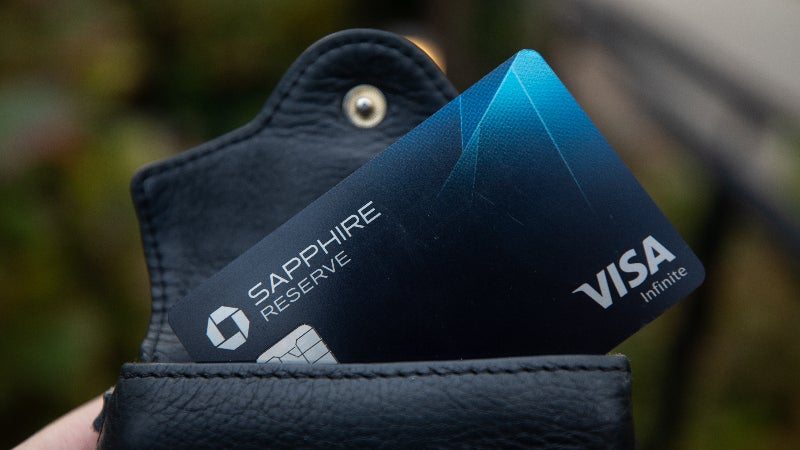
The Chase Sapphire Reserve dropped in 2016 and broke the internet. People literally bent metal cutting through the thing because it was too thick for regular scissors. Eight years later, with an annual fee that’s climbed from $450 to $550, the question everyone asks: is the CSR still worth it in 2026?
Short answer: For the right person, absolutely. For everyone else, you’re probably better off with the Sapphire Preferred.
Let me break down exactly who should get this card, who should skip it, and the real math behind that controversial fee.
The Chase Sapphire Reserve at a Glance
| Feature | Details |
|---|---|
| Annual Fee | $550 |
| Welcome Bonus | 60,000 points ($900+ value) after $4K spend in 3 months |
| Travel Credit | $300/year (automatic) |
| Effective Fee | $250/year after credit |
| Dining Earning | 3x points |
| Travel Earning | 3x points (excluding travel credit purchases) |
| Other Spending | 1x points |
| Point Value | 1.5¢ via Chase Travel, 2¢+ via transfers |
| Sign-Up Bonus | 60,000 points |
Breaking Down the $550 Annual Fee
Let’s get this out of the way first, because the fee is what stops most people.
The $300 Travel Credit (Automatic & Easy)
Every cardmember year, you get $300 that automatically applies to travel purchases. This includes:
- Airlines (including budget carriers)
- Hotels
- Car rentals
- Parking and tolls
- Ride-sharing (Uber, Lyft)
- Transit passes
This isn’t like those annoying Amex airline credits that require mental gymnastics. Book an Uber? Credit applied. Buy a Southwest flight? Credit applied. Park at the airport? Yep.
Real fee after credit: $250
If you spend $300 on travel annually (and honestly, who doesn’t), your effective annual fee is $250. That changes the math significantly.
What You’re Really Paying For
That $250 gets you:
- Priority Pass Select lounge access (~$429/year value)
- Global Entry or TSA PreCheck credit ($100 every 4 years = $25/year)
- 1.5x point multiplier on Chase Travel redemptions
- Travel insurance package (trip delay, cancellation, lost baggage)
- Primary rental car insurance (saves ~$20/day on rentals)
- No foreign transaction fees
- DoorDash DashPass ($96/year value)
- Peloton membership ($48/year credit)
- Lyft Pink membership
- Chase Offers bonuses — rotating statement credits (currently including a free year of WHOOP worth $359!)
When you add up the tangible credits and memberships, you’re looking at roughly $600+ in face value before you even consider points earning. Keeping track of all these benefits can be overwhelming — check our monthly credit card perks checklist to make sure you’re claiming every credit before it expires.
Points Earning & Value: The Real Story
Here’s where the Reserve shines — and where most reviews get lazy.
Earning Structure
- 3x on travel and dining (the categories that matter)
- 1x on everything else
At first glance, 3x doesn’t seem crazy. The Amex Gold gets 4x on dining. But here’s the thing: Chase points can be worth more per point. Can’t decide between the CSR and the Amex Platinum? Our complete Amex Platinum vs CSR comparison breaks down the full showdown.
Point Valuations: 1.5¢ vs 2¢+
Through Chase Travel Portal:
Every point is worth 1.5¢. That’s a guaranteed floor. Book a $600 flight and it costs you 40,000 points. Plus, Points Boost can push that to 2cpp+ on select hotels and flights — see our complete Chase Travel Portal guide for when the portal beats transfer partners. Chase also now offers a hotel price match guarantee — book through the portal and claim the difference if you find it cheaper elsewhere.
Through Transfer Partners:
This is where the Reserve becomes elite. Transfer to partners like:
- Hyatt (often 2¢+ per point)
- United (domestic sweet spots at 1.5-2¢)
- Southwest (Companion Pass magic)
- Air France/KLM (great for Europe business class)
A well-executed transfer to Hyatt can easily get you 2-3¢ per point. I’ve personally gotten 2.8¢ on a Park Hyatt booking. New to booking award flights? Our step-by-step guide to booking award flights walks you through the entire process.
Real-World Example
Say you spend:
- $500/month dining ($6K/year) → 18,000 points
- $400/month travel ($4.8K/year) → 14,400 points
- $1K/month other ($12K/year) → 12,000 points
Total: 44,400 points annually
At 2¢/point (conservative transfer value): $888 in value
That’s a $638 profit over the effective $250 fee. And that doesn’t count the welcome bonus or perks.
The Priority Pass Situation in 2026
Let’s address the elephant in the room: Priority Pass isn’t what it used to be.
Lounges are crowded. Some restaurants have left the program. Certain high-traffic airports have capacity limits. I get it.
But here’s my honest take: it’s still worth it for most travelers.
At Seattle, I regularly hit the Club at SEA. Internationally? The PP network is still solid.
⚠️ Important change: As of late 2024, Chase Sapphire Reserve no longer includes Priority Pass restaurant credits. You can still use PP lounges, but the $28-36 dining credits at airport restaurants are gone. If restaurant access matters to you, consider the Capital One Venture X or Amex Platinum instead. See our Priority Pass Restaurant Guide for which cards still include this benefit.
If you travel 4+ times per year, you’ll easily get $400+ in value from lounge access and restaurant credits. That alone nearly covers the effective annual fee.
The Chase Sapphire Lounges
Chase is building their own lounge network. As of early 2026:
- Hong Kong (HKG) - Open
- New York JFK (Terminal 4) - Open
- New York LaGuardia (LGA) - Open
- Boston (BOS) - Open
- Las Vegas (LAS) - Open
- San Diego (SAN) - Open
- Phoenix (PHX) - Open
- Philadelphia (PHL) - Open (Terminal D/E Connector)
These lounges are gorgeous, uncrowded, and don’t require Priority Pass. If Chase keeps expanding, this benefit alone could justify the card in a few years.
Travel Protections That Actually Matter
The Reserve’s insurance package isn’t flashy, but it’s saved me real money:
Primary Rental Car Insurance
This is huge. Most credit cards offer secondary coverage, meaning you file with your own auto insurance first. The Reserve is primary — their coverage kicks in immediately.
At $20-30/day for rental insurance, this adds up fast. Rent cars twice a year for a week each? That’s $280-420 saved. For a complete breakdown of which cards offer primary vs. secondary coverage, check out our guide to credit cards with free rental car insurance.
Hotel Price Match Guarantee (New for 2026!)
Chase quietly added a hotel price match guarantee for Reserve cardholders. If you book a hotel through Chase Travel and find the same room cheaper elsewhere within 24 hours, they’ll refund the difference. This removes the pricing anxiety that used to come with portal bookings.
Trip Delay Insurance
Flight delayed 6+ hours or overnight? The Reserve covers:
- $500 per ticket for meals and lodging
- You and immediate family
I’ve claimed this twice. It’s a real benefit.
Other Protections
- Trip cancellation/interruption (up to $10K per person)
- Lost luggage reimbursement ($3K per passenger)
- Baggage delay ($100/day for 5 days)
- Emergency medical evacuation ($100K)
For a full comparison of travel protection across all premium cards, see our best credit cards for travel insurance coverage guide.
Who Should Get the Chase Sapphire Reserve
Get the Reserve if you:
- Spend $5K+ annually on travel and dining combined
- Travel 3+ times per year (lounge access matters)
- Rent cars at least a few times per year
- Want the simplicity of strong point value guarantees
- Actually use the $300 travel credit (not hard)
Skip the Reserve if you:
- Travel once or twice a year max
- Mostly spend on groceries (get the Amex Gold instead)
- Don’t care about lounges
- Already have Priority Pass through another card
- Prefer cash back over points
Reserve vs Preferred: The Real Comparison
The Sapphire Preferred is $95/year. Here’s the honest breakdown:
| Feature | Reserve ($550) | Preferred ($95) |
|---|---|---|
| Effective Fee | $250 | $45 (w/ $50 hotel credit) |
| Travel Credit | $300 | $50 (hotels only) |
| Portal Multiplier | 1.5¢/point | 1.25¢/point |
| Lounge Access | Yes | No |
| Rental Car Insurance | Primary | Secondary |
| TSA PreCheck Credit | Yes | No |
My take: If you’d use the lounges and travel credit, the Reserve wins. If you travel occasionally and want solid earning with low fees, the Preferred is the smarter play. Read my full comparison.
The Verdict: Is It Worth $550 in 2026?
Yes, for frequent travelers who’ll use the perks.
After the $300 travel credit, you’re paying $250 for:
- Priority Pass + Chase Sapphire Lounges ($400+ value)
- Primary rental car insurance ($200+ value)
- TSA PreCheck/Global Entry ($25/year)
- DashPass and other credits ($144+ value)
- Better point redemption rates
That’s easily $750+ in tangible value for a $250 effective fee.
But if you’re stretching to justify the card, you probably shouldn’t get it. The Sapphire Preferred exists for a reason.
How to Apply Strategically
Before applying, know this:
-
Chase’s 5/24 rule applies — If you’ve opened 5+ cards (any issuer) in 24 months, you’ll be auto-denied. See our 5/24 guide.
-
You can’t hold both Sapphires — If you have the Preferred, you’ll need to product change or cancel first.
-
48-month bonus rule — You can’t earn the Sapphire bonus if you received any Sapphire bonus in the last 48 months.
-
Consider the welcome bonus timing — 60,000 points for $4K spend is solid, but watch for limited-time elevated offers.
Bottom Line
The Chase Sapphire Reserve remains one of the best premium travel cards in 2026. It’s not for everyone — the $550 fee is real — but for those who travel frequently and leverage the benefits, it’s a no-brainer.
The math works. The perks are usable. And those Chase Ultimate Rewards points are genuinely valuable.
If you’re on the fence, start with the Sapphire Preferred. You can always upgrade later once your travel habits warrant it.
Have questions about whether the Reserve makes sense for your situation? Drop a comment below.
💬 Comments
Have questions or thoughts? Join the discussion below!