
There’s a weird tension in the points world. Everyone preaches “never cash out your points!” But sometimes? Cashing out makes total sense.
Chase’s Pay Yourself Back feature lets you redeem Ultimate Rewards points for statement credits at elevated rates — up to 1.5 cents per point for charitable donations. That’s actually better than most transfer partner redemptions people spend hours searching for. (For the full picture on redemption options, check out our complete guide to using Chase points.)
So when should you use it? When should you avoid it? Let’s break down everything about Pay Yourself Back.
What Is Chase Pay Yourself Back?
Pay Yourself Back (PYB) lets you exchange Chase Ultimate Rewards points for statement credits on specific purchase categories. Think of it as “enhanced cash back” — you’re getting more than the standard 1 cent per point that basic cash back gives you.
The key difference from normal cash back:
- Regular cash back = 1 cent per point, any purchase
- Pay Yourself Back = 1.25-1.5 cents per point, but only for specific categories
Chase rotates these categories quarterly. Some stick around forever (like charities), others come and go (RIP groceries and home improvement stores).
Current Pay Yourself Back Categories (March 2026)
Here’s what’s available right now. Chase updates these quarterly, so I’ll keep this section fresh.
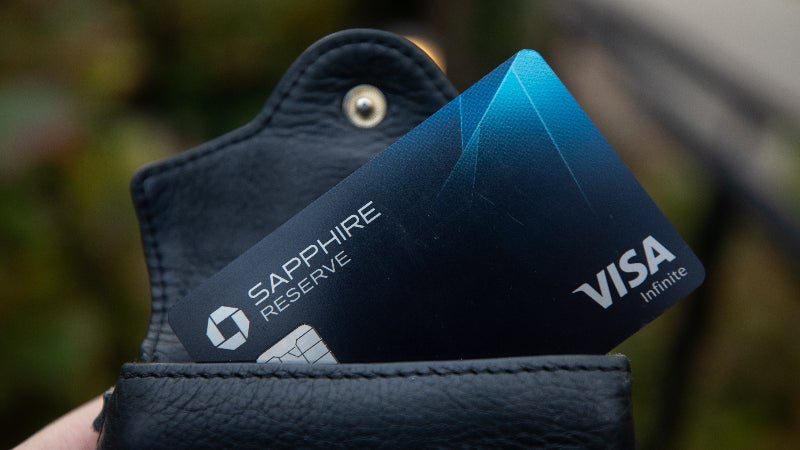
Chase Sapphire Reserve
| Category | Value Per Point | Expires |
|---|---|---|
| Fitness Clubs & Gym Memberships | 1.25¢ | March 31, 2026 |
| Gas Stations | 1.25¢ | March 31, 2026 |
| Annual Fee | 1.25¢ | March 31, 2026 |
| Select Charities | 1.5¢ | December 31, 2026 |
The Sapphire Reserve gets the best categories. Gas stations at 1.25 cpp is legitimately useful — fill up, then erase the charge. Gym memberships too, if you’ve got a monthly charge hitting the card.
Chase Sapphire Preferred
| Category | Value Per Point | Expires |
|---|---|---|
| Select Charities | 1.25¢ | December 31, 2026 |
Yeah… that’s it. The Sapphire Preferred gets the short end here. Charities only.
Freedom Cards (Unlimited, Flex, Visa)
Same deal — Select Charities at 1.25 cpp through December 2026.
Ink Business Cards
All Ink cards (Preferred, Cash, Unlimited, Plus) — just charities at 1.25 cpp.
Chase Aeroplan Card
This one’s actually interesting:
| Category | Value Per Point | Notes |
|---|---|---|
| Travel Purchases | 1.25¢ | Capped at 200k points/year |
| Annual Fee | 1.25¢ | No expiration listed |
| Gas Stations | 0.8¢ | Through December 2026 |
| Dining | 0.8¢ | Through December 2026 |
| Grocery Stores | 0.8¢ | Through December 2026 |
| Amazon & Whole Foods | 0.8¢ | Through December 2026 |
The travel category at 1.25 cpp is notable. But 0.8 cpp for everyday categories? Hard pass — your points are worth more transferred to Aeroplan partners.
United Cards
| Category | Value Per Point | Expires |
|---|---|---|
| Annual Fee | 1.35-1.6¢ | December 31, 2026 |
| United Flights ($50+) | 1.0¢ | December 31, 2026 |
The annual fee payback is decent. United flights at 1 cpp is meh — just book through the portal or transfer partners instead.
How to Actually Use Pay Yourself Back
The process is dead simple:
- Log into your Chase account
- Go to ultimaterewardspoints.chase.com/pay-yourself-back
- Select your card
- Choose which qualifying purchases to pay back
- Decide how many points to use per purchase
A few things people miss:
You have 90 days. Purchases from the past 90 days are eligible. Don’t rush — wait until you have enough points to maximize the redemption.
You keep your original points. When you made that gas station purchase, you earned 1X or 3X points on it. Paying it back doesn’t claw those back. You earned the points, you’re just using different points to erase the charge.
Partial redemptions work. Don’t have enough points to cover the whole $283.60 gas bill? Pay back $200 of it. No minimums.
Chase rounds in your favor. If the math works out to 18,906.67 points, they’ll charge you 18,906. Small thing, but nice.
When Pay Yourself Back Actually Makes Sense
Here’s my framework for when PYB is worth considering:
Good Uses of Pay Yourself Back
You have points you’ll never transfer. Be honest with yourself. Are you actually going to book that aspirational Emirates First Class redemption? If you’ve got 80,000 points sitting there for 3 years untouched, maybe cashing out at 1.25 cpp isn’t crazy.
The charity angle. If you’re donating to charity anyway, doing it through PYB at 1.5 cpp is basically free extra value. You were going to give the money — now your points go further.
Gym memberships and recurring charges. If you’ve got a $150/month gym membership hitting your Sapphire Reserve, that’s 12,000 points per year to erase $150 in monthly charges (at 1.25 cpp = $187.50 value). Easy, automatic, no thought required.
You need liquidity, not aspirations. Life happens. Sometimes you need statement credits more than you need a potential trip to Tokyo. No shame in that.
Bad Uses of Pay Yourself Back
You have specific redemption goals. If you’re saving for a known redemption — ANA First Class, Hyatt suite upgrades, whatever — don’t dilute your stash. Transfer partners often yield 2-5+ cpp for premium cabins.
The category rates are trash. Aeroplan card’s 0.8 cpp for groceries? United at 1 cpp for flights? These are objectively bad. You’re leaving value on the table.
You’re impatient. The worst reason to use PYB is “I just want to use my points for something.” That’s how you end up with $500 in statement credits when you could’ve had a $1,500 flight.
Pay Yourself Back vs. Other Redemption Options
Let me put some numbers on this:
| Redemption Method | Value Per Point | Notes |
|---|---|---|
| Cash Back | 1.0¢ | Always available, no restrictions |
| Pay Yourself Back | 1.25-1.5¢ | Limited categories |
| Chase Travel Portal | 1.25-1.5¢ | Must book travel |
| Transfer Partners | 1.5-5.0+¢ | Depends heavily on redemption |
The math is clear: transfer partners can be way better. But there’s a huge “can” in that sentence.
If you’re booking economy flights domestically, the portal at 1.5 cpp (with Sapphire Reserve) is often as good as transfers. And if you’re paying off your gym membership at 1.25 cpp, you’re doing better than most airline redemptions anyway.
The Strategy: Segment Your Points
Here’s how I think about it:
Core stash (70-80%): Keep these for transfer partner redemptions. This is your “trip fund” for aspirational bookings.
Tactical stash (20-30%): Use these opportunistically for PYB categories that make sense. Gas stations, gym, annual fee offset.
Don’t go all-in on either approach. Pure transfer-partner purists leave easy value on the table. Pure PYB users miss the best redemptions.
Eligible Charities for 1.5 CPP Redemptions
If you’re going the charity route, here’s the full list of eligible organizations:
- American Heart Association
- American Red Cross
- Equal Justice Initiative
- Feeding America
- GLSEN
- Habitat for Humanity
- International Medical Corps
- International Rescue Committee
- Leadership Conference Education Fund
- Make-A-Wish America
- NAACP Legal Defense and Education Fund
- National Urban League
- Out & Equal Workplace Advocates
- SAGE
- Thurgood Marshall College Fund
- United Negro College Fund
- UNICEF USA
- United Way
- World Central Kitchen
Solid list. If you’re already donating to any of these, routing your donations through PYB at 1.5 cpp is a no-brainer.
Maximizing Pay Yourself Back: Advanced Tips
Pool Points First
All your Ultimate Rewards-earning cards can send points to one premium card (Sapphire Reserve, Sapphire Preferred, or Ink Preferred).
Why does this matter? Your Freedom Unlimited earns 1.5X everywhere, but only gets charities for PYB. Transfer those points to your Sapphire Reserve, and suddenly they’re worth 1.25 cpp on gas instead.
Quick math:
- Freedom Unlimited at grocery store: 3% cash back
- Transfer to Sapphire Reserve, use PYB for gas: 3% × 1.25 = 3.75% effective value
Not bad.
Stack With Bonus Categories
The Sapphire Reserve earns 3X on dining. If dining ever comes back as a PYB category (it’s been gone since 2024), you’d effectively get 3.75% back on restaurants.
Currently, gas stations are in. The Reserve earns 1X on gas… so you’re getting 1.25% back. Fine, not amazing. But the Freedom Flex sometimes has gas stations as a 5X category. Stack that with PYB transfer:
- Freedom Flex at gas station during 5X quarter: 5%
- Transfer to Reserve, PYB at 1.25 cpp: 6.25% effective return
That’s pretty nuts for gas.
Time Your Redemptions
PYB categories expire at quarter-end. If gas stations are going away March 31st, make sure you’ve got all your gas charges paid back before then. Chase does sometimes extend categories, but don’t count on it.
What Happened to the Good Categories?
Long-time players remember when PYB had:
- Grocery stores (gone end of 2025)
- Home improvement stores (gone September 2025)
- Department stores (gone end of 2025)
- Pet stores and veterinary services (gone June 2025)
- Utilities and insurance (gone March 2025)
Chase has systematically stripped out the valuable everyday categories. We’re down to gas, gyms, charities, and annual fees for the Sapphire Reserve. Everything else is basically charity-only.
It’s disappointing, but honestly? The feature is still useful. Gas at 1.25 cpp beats holding points forever. Charities at 1.5 cpp is legitimately great. Annual fee offset means you’re effectively paying $440 instead of $550 for your Reserve (if you use 44,000 points).
Bottom Line
Pay Yourself Back isn’t the holy grail of point redemptions. It’s also not a trap for suckers who “don’t know how to use points.”
It’s a tool. Use it when it makes sense:
- ✅ Recurring charges in eligible categories
- ✅ Charitable donations you’d make anyway
- ✅ Annual fee offset if you value the peace of mind
- ✅ Points you’ve been hoarding with no specific goal
Skip it when:
- ❌ You’re saving for a specific transfer partner redemption
- ❌ The category rates are below 1.25 cpp
- ❌ You’re just impatient and want to use points for something
Chase updates PYB categories quarterly. Bookmark the official PYB page and check what’s available before making decisions.
Sometimes the boring redemption is the right one.
💬 Comments
Have questions or thoughts? Join the discussion below!